How to Avoid Cash Machine Fees in Albania and the Balkans
By Martin · Updated · 9 min read
This page contains affiliate links. Learn more
In Albania, the cash machines charged me a big fee every time I took money out, whatever my card offered. My bank doesn’t charge me for using my card abroad, and it made no difference: the fee comes from the machine, not your bank.
You can’t avoid every fee in the Balkans, but you can stop paying several of them at once. Here’s what I learned, plus what I’ve looked into since.
Want to see what your withdrawals really cost? Try my free cash machine fee calculator.
The three fees you can pay on one withdrawal
- The machine’s own fee. A fixed charge from the bank that owns the machine, shown on screen before you confirm. This is the one that caught me out in Albania.
- Your card’s fees. Many bank cards add a foreign transaction fee (often around 3%) and sometimes a fee for each cash withdrawal.
- A bad conversion rate. Many machines offer to charge you in pounds, euros or dollars instead of the local currency. Say yes and you get the machine’s rate, which is usually several percent worse.
A fee-free card gets rid of number 2, and saying no to the conversion gets rid of number 3. Only the machine’s fee is left, and you can cut that by taking out more at once.
Better than a cash machine: where else to get cash
A cash machine isn’t your only option, and in the Balkans it’s often not the cheapest. Here’s what I’d do now, from what I’ve looked into since my trip.
1. Change euros at an exchange office in town
Every Balkan town has exchange offices, and the ones in town centres often give a rate close to the real one, with little or no commission. For larger amounts, that can beat a cash machine once its fee is counted. Look for the local name:
- Albania: këmbim valutor (often just “kambim”)
- Serbia, Bosnia and Montenegro: menjačnica
- North Macedonia: menuvačnica
- Romania: casă de schimb
How to get a good deal:
- Compare two or three offices. Look at the rate they buy euros at, which is the one you get.
- Be wary of “0% commission” signs. The commission can be hidden in a worse rate.
- Avoid airports, border crossings and hotels. Airport counters are often 5 to 10% worse, and border booths can be worse still. Change just enough to get into town.
- Count your money at the counter and keep the receipt.
2. Get your euros where cash is cheap
Euros are easy to change everywhere in the Balkans, so get them somewhere withdrawals are cheap and carry them in. If you’re coming from Italy, as I did on the ferry to Albania, take out euros there before you leave: with a fee-free card and a bank’s own machine, that’s often free or close to it. Romania and Bulgaria also have plenty of bank machines that don’t charge foreign cards.
Don’t carry more than you’re comfortable with, keep it split between bags, and bring smaller notes (€20s and €50s), as €200 and €500 notes are hard to change.
3. Pay by card where you can
The cheapest cash is the cash you don’t need. With a fee-free card, paying by card in supermarkets, hotels and bigger restaurants costs nothing extra. Keep cash for buses, taxis, markets and small places.
4. Then use a cash machine smartly
When you do need a machine, use a bank’s own machine in town, take out the maximum, and always choose the local currency. The rest of this guide covers how.
What cash machines charge in Albania
When I checked in October 2026, travel guides put most Albanian bank machines at around 500 to 800 lek per withdrawal for foreign cards (roughly €5 to €9). From what I’ve read:
- BKT and Raiffeisen have the biggest networks, including in smaller towns, but tend to sit at the top of that range.
- OTP and Credins have been reported a little lower, around 500 to 600 lek.
- Standalone machines in tourist areas, including Euronet, can charge more and push the conversion trap harder.
- No machine is reliably free for foreign cards.
Fees change, so treat these as a guide and read the screen before you confirm. The amount you can take out at once is often somewhere between 40,000 and 75,000 lek, depending on the bank.
How to pay less in Albania
Take out the maximum, less often
The machine’s fee is fixed, so taking out 40,000 lek once costs the same fee as taking out 5,000 lek. The calculator shows how much this saves over a trip.
Always choose lek
If the machine asks whether to charge you in your own currency, choose lek (or “without conversion”). The same goes for card machines in shops and restaurants.
Use a card without foreign fees
I used Revolut for card payments and cash withdrawals abroad. It doesn’t stop the machine’s own fee, but it means you’re not paying your bank’s fees on top. Check your plan’s free withdrawal limit, and note that exchange fees can apply at weekends.
Bring euros and change them
Lek is hard to get outside Albania, but euros are easy. Exchange offices in central Tirana often give a better deal than a cash machine once its fee is counted (see where else to get cash above). Avoid the counters at the airport, which have the worst rates.
Euros are also accepted in plenty of places on the coast and in hotels, usually at a slightly worse rate, and you’ll get your change in lek, as I mention in my Bari to Durrës ferry guide.
Pay by card where you can
Cards work in bigger supermarkets, hotels and many restaurants in Tirana. Save your cash for buses, furgons (shared minibuses), taxis, markets and small places, which are often cash only.
Don’t run out
This was my biggest money mistake. Once your wallet is empty, you take the nearest machine at whatever price it charges. Top up while you still have a choice, from a bank’s own machine in town rather than a standalone one at a station or tourist spot. There’s more in the budget travel mistakes I made.
Spend or change your lek before you leave
Lek is hard to change back outside Albania, so don’t take out more than you’ll use before you go.
North Macedonia
North Macedonia uses the denar. From what I’ve read, bank machines often charge foreign cards around 250 to 500 denar (about €4 to €8), and a single withdrawal is often capped at around 24,000 to 30,000 denar. The same rules apply: choose denar, take out more at once, and use up your denar before you leave, as they’re hard to change elsewhere.
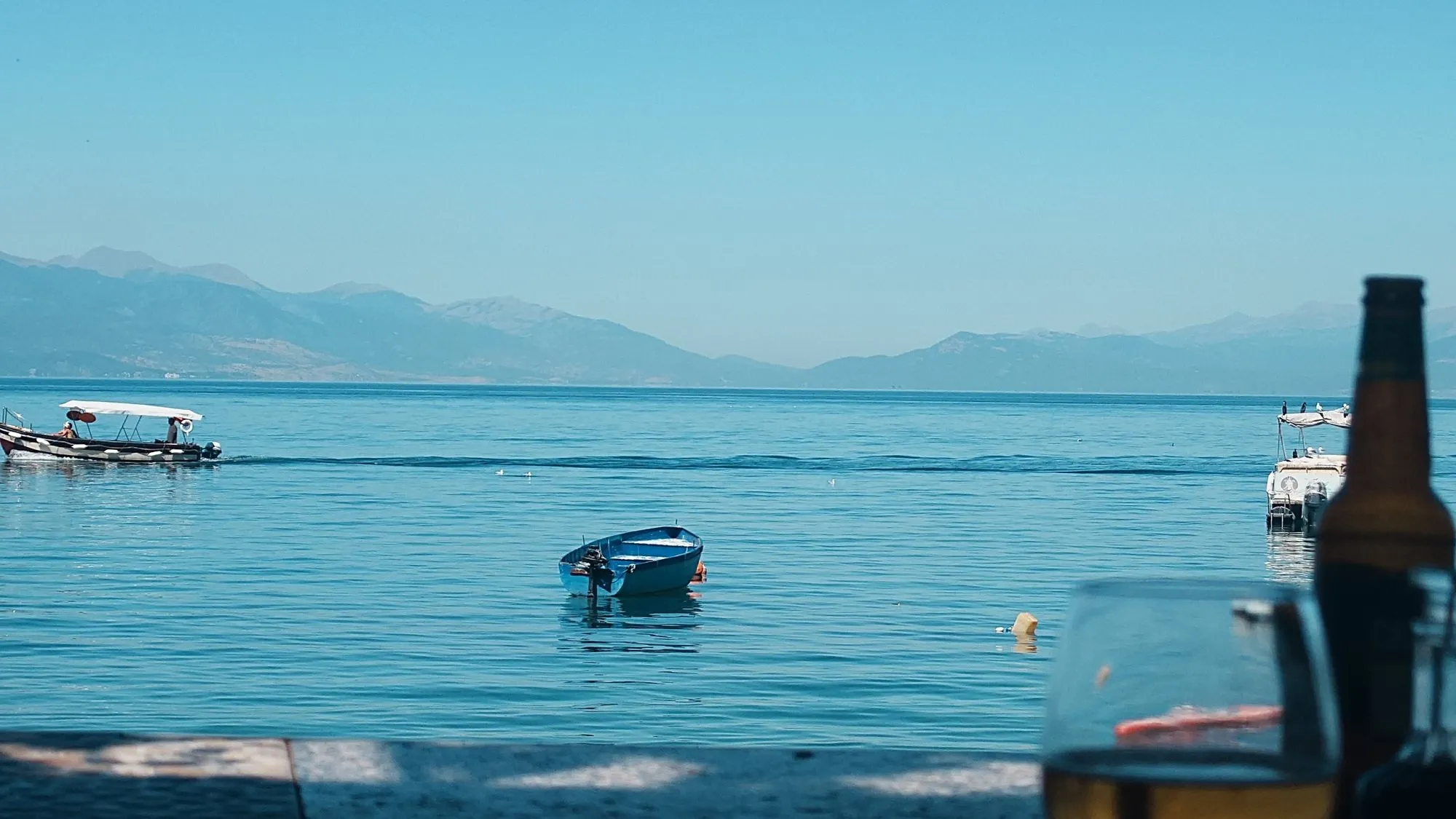
You may need cash for your room, too. When I arrived at an apartment I’d booked on Booking.com in Ohrid, the owner explained that card payments through booking apps often don’t go through in North Macedonia, and it can happen elsewhere in the Balkans. I checked, nothing had been taken, and I paid him in cash. Budget for it, and always check your account before paying in person so you don’t pay twice.
Ohrid was one of the cheapest places I stayed, so cash goes a long way. Here’s my Lake Ohrid guide.
Montenegro
Montenegro uses the euro, even though it isn’t in the EU. Bank machines often charge foreign cards around €2 to €4. If your card is in euros, there’s no conversion to worry about, but check whether your bank charges for withdrawals outside the EU. Cards are widely accepted on the coast; inland, small konobas and guesthouses are often cash only.
The rest of the Balkans at a glance
I haven’t used cash machines in all of these, so this is from my research in October 2026: what bank machines typically charge foreign cards. Standalone machines in tourist areas, such as Euronet, often charge more and push the conversion trap.
| Country | Currency | Typical machine fee |
|---|---|---|
| Outside the EU | ||
| Albania | Lek | About 500 to 800 lek; none reliably free |
| Bosnia and Herzegovina | Convertible mark (KM) | About 10 to 18 KM at most banks; a few reported free |
| Kosovo | Euro | About €5 at almost every bank |
| Montenegro | Euro | About €2 to €4 |
| North Macedonia | Denar | About 250 to 500 denar |
| Serbia | Dinar | About 400 to 600 dinar; a couple of banks free |
| EU countries | ||
| Bulgaria | Euro (since January 2026) | Often free at bank machines; some charge €3 to €5 |
| Croatia | Euro | About €4 to €5.50 at most banks |
| Greece | Euro | Free at some banks, others about €1.50 to €2 |
| Romania | Leu | Usually free at bank machines |
| Slovenia | Euro | Free at some banks, others about €2.50 to €6.50 |
Got a euro card? In Kosovo, Montenegro and the EU countries on the euro there’s no conversion, so the machine’s fee is the main cost. Within the EU, your bank usually has to charge you the same as at home for a euro withdrawal; Kosovo and Montenegro are outside the EU, so check your bank’s fees there.
Wherever you are, the same rules apply: use a bank’s own machine, take out more at once, and always choose the local currency. The cash machine fee calculator covers all of these countries.
A quick checklist
- A card without foreign fees, plus a backup card in case a machine won’t take the first one.
- Euros in smaller notes, for exchange offices and emergencies, taken out where withdrawals are cheap.
- Change money at an exchange office in town, never at the airport or border.
- Take out the maximum each time, from a bank’s machine in town.
- Always choose the local currency.
- Top up before you run out.
Travelling between these countries? Each has its own visa-free days, separate from Schengen. My Balkans days calculator counts them.
Everything I’ve written about the region, from ferries and buses to money and visa-free days, is on my Albania and the Balkans page.
How I used my card abroad, and what it did and didn’t cover, is in my Revolut for travel review.
FAQ
Do cash machines in Albania charge fees? Yes. When I travelled, every machine I used charged a fee, and travel guides put most at around 500 to 800 lek per withdrawal for foreign cards.
Are there free cash machines in Albania? Not reliably for foreign cards. Some banks charge less than others, so read the fee on screen before you confirm.
Which Balkan countries have free cash machines? From my research, Romania and Bulgaria are the easiest: many bank machines there don’t charge foreign cards. Greece and Slovenia have some free bank machines. Kosovo, Croatia and Albania are among the most expensive.
Should I choose lek or my own currency at the cash machine? Lek. If you let the machine convert to pounds, euros or dollars, its rate is usually several percent worse.
Where’s the best place to get cash in the Balkans? Often an exchange office in a town centre, changing euros you brought with you, rather than a cash machine. Compare a couple of offices, and avoid airports, borders and hotels. If you use a cash machine, pick a bank’s own machine and take out the maximum.
Can I pay in euros in Albania? Often, especially on the coast and in hotels, but usually at a worse rate, and you’ll get your change in lek.
Is it better to exchange euros or use a cash machine in Albania? For larger amounts, a licensed exchange office in a town can work out cheaper than a cash machine once its fee is counted. Avoid airport exchange counters.
How much cash should I carry in the Balkans? Enough for buses, taxis, markets and small places, which are often cash only. Pay by card where you can, and top up before you run out.