Bari to Durrës Ferry: My Tips for the Crossing from Italy to Albania
By Martin · Published · 8 min read
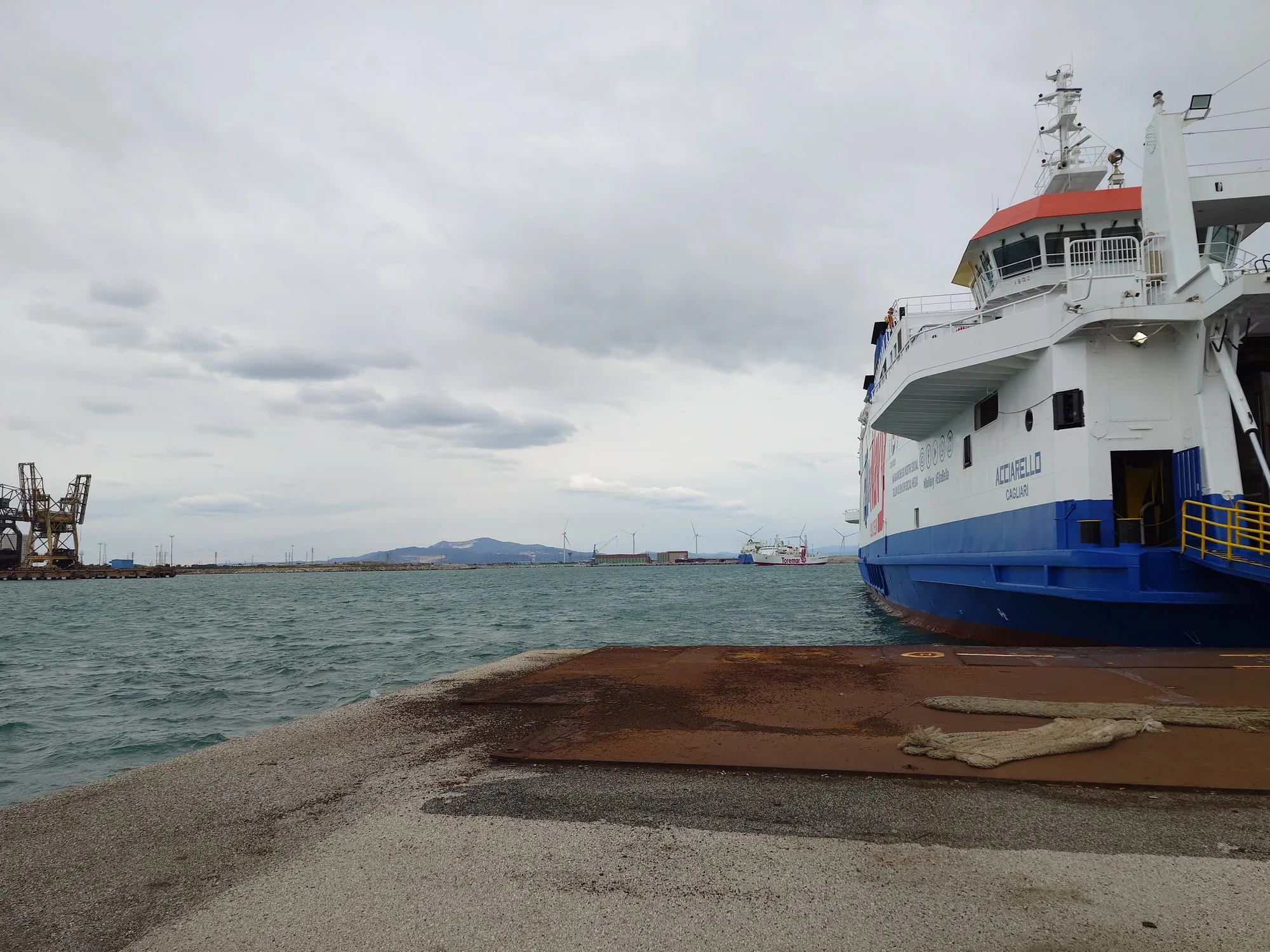
The ferry from Bari to Durrës (often written Durres) is the easiest way to get from Italy to Albania without flying, and it’s how I moved from my Italian work-exchange stays to the Balkans. It’s a long crossing and Bari port has a couple of traps, so here’s everything I wish I’d known before I went.
The short version
- Crossing time: mine took around 11 to 12 hours. I’d booked an overnight sailing with a cabin, but it was cancelled, so I crossed in the day instead. Depending on the company and the ship, crossings take anywhere from about 8 to 11 hours.
- How often: the route runs all year. When I looked into it again for next time, there were up to 4 sailings a day in summer and 1 or 2 a day the rest of the year.
- Price when I booked: about £35 (€40) for a seat and £130 (€150) for a cabin. Prices vary a lot by date, season and company.
- Booked with: the Ferryhopper app, which shows sailings from the different companies together.
- Biggest tips: watch your email for changes, plan how you’ll reach the ticket office in Bari, and bring your own food.
Booking
Three companies run the route: GNV (Grandi Navi Veloci), Ventouris Ferries and Adria Ferries. Rather than checking each one, I used Ferryhopper, which shows the sailings side by side, so you can compare times and prices in one place.
Seat or cabin? On an overnight crossing, a cabin means a proper night’s sleep and somewhere to lock your bags, but it costs several times more than a seat. If you’re on a tight budget and can sleep anywhere, a seat will do. If you’re arriving and travelling on the same day, the cabin is worth considering: it can replace a night in a hotel, which is why I booked one.
Check the luggage allowance
I didn’t think about this at the time, but it’s worth checking: the allowance isn’t the same on every ferry. When I checked the companies’ rules afterwards, one allowed up to 40 kg, another up to 2 bags, and one listed hand luggage only for foot passengers. If you’re travelling with a big bag, check the company’s rules before you pick a sailing.
Watch your email, not just the app
I’d booked the overnight sailing with a cabin, partly to save a night in a hotel: sleep on the boat, then carry on to Lake Ohrid the next day. That sailing was cancelled, and I only found out by email. The app didn’t send a notification; I only noticed because the booking showed it had changed.
I got a full refund for the cabin and paid for a seat on the next day’s ferry instead. That meant paying for two hotel nights rather than the cabin, which cost about the same, but it added a day to the journey. Luckily I’d planned to arrive early and spend two nights in Ohrid before my stay started, so it didn’t matter.
Is a flexible ticket worth it? I’d paid a small extra on Ferryhopper for a flexible ticket, which let me switch to another sailing for free, even with another company, up to 3 hours before departure instead of the usual 24. I came by train from Calabria the same day, so it was cover in case I was late. It didn’t help in the end: the cancellation was down to the weather, and the other ferries were full. It’s still worth it if you’re travelling to the port on the day, but it’s no substitute for a spare day.
Check your email in the days before you sail, and leave a spare day around the crossing in case yours is cancelled too. Getting to Bari by train? Here’s how I did it on four slow trains from Calabria.
Taking a car, motorbike or pet
I went as a foot passenger, but I looked into the other options in case I do it again:
- Vehicles: all three companies carry cars, motorbikes and campervans. Ferryhopper lists vehicle fares from roughly €45 for a car, €30 for a motorbike and €80 for a campervan on top of the passenger fare, though they climb in summer. Bring your licence, registration documents and proof of insurance that covers Albania. If it’s a hire car, most rental companies don’t allow it on a ferry or out of the country without permission, so ask first.
- Pets: they have to be added to your booking. Small pets travel in a carrier, larger ones on a lead with a muzzle, and they generally aren’t allowed in standard cabins or the restaurant. There are on-board kennels (around €10) and some pet-friendly cabins.
Getting to the ferry in Bari
Coming by train? Bari Centrale is about a 45-minute walk from the port and the old town, and there are cheap buses nearby. If you have a few hours before your ferry, drop your bags somewhere and walk around: Bari is a really nice place, and here’s where to leave your bags.
The port itself is the part that catches people out.
- You collect your tickets at the port, and you can only do it about 2 hours before sailing.
- The ticket office is at the opposite end of the port from Bari old town. You can’t walk through the port itself, so on foot it means walking along the main road and over dirt paths. That’s no fun with a suitcase.
- The easier way: enter the port on the old town side and take the port shuttle bus to the ticket office. The shuttle runs both ways, so once you have your tickets, ride it back to the ferry terminal.
Give yourself plenty of time: between the shuttle, the ticket queue and passport control, it all takes longer than you’d think.
You’re leaving the Schengen area
Albania isn’t in the Schengen area, so you go through exit passport control at Bari. Arrive at the port 1.5 to 2 hours before sailing as a foot passenger, more with a vehicle. If you’re from outside the EU, the EU’s Entry/Exit System registers your exit, and the days you spend in Albania don’t count towards your Schengen 90 days. That’s one reason Albania is popular with long-term travellers. If you’re watching your days, the Schengen calculator works out how many you have left, and the Balkans days calculator counts Albania’s own limit. There’s more on how the new checks work in EES and ETIAS explained.
From the UK? British passport holders get Albania’s own visa-free limit of 90 days in any 180, and your passport needs to be valid for at least 3 months after the day you leave. Check the UK government’s Albania entry requirements before you go, as rules can change.
On board
- Bring your own food and drink. Everything on board is very expensive. A picnic from a supermarket in Bari will save you a lot.
- Bring layers if you’re in a seat. Ferry air conditioning can be fierce, especially overnight.
- Download anything you want to watch before you leave. Mobile signal disappears out at sea, and on-board Wi-Fi is limited or paid.
Arriving in Durrës
Arriving in Durrës is easy. The bus terminal and travel offices are about 5 minutes’ walk from the ferry: take the footbridge over to the other side of the road.
- Money: Albania uses the lek, but euros are widely accepted. Pay in euros and you’ll usually get your change in lek. The cash machines in Albania charged me a big fee every time, so take out larger amounts less often, or arrive with some euros. Here’s how to avoid cash machine fees in Albania.
- Phone data: check your eSIM covers Albania before you sail. Many “Europe” plans don’t include countries outside the EU. Here’s how the main travel eSIMs compare.
Durrës to Tirana
Buses to Tirana leave from the bus terminal by the port roughly every half hour during the day. The fare is a couple of euros, paid in cash on the bus, and it takes about an hour depending on traffic.
Be ready for the drop-off. Most buses drop you at the bus terminal on the outskirts of Tirana, not in the centre, so you’ll need a local bus or a taxi into town.
If you’re heading on to North Macedonia like I did, the next leg is in my guide to the bus from Tirana to Lake Ohrid, and what to do there is in Lake Ohrid on a budget.
Other ferries from Italy to Albania
Bari to Durrës was the obvious route for me, but when I looked into the options for next time, there are a couple of others worth knowing about:
- Brindisi to Vlorë: the shortest crossing, at about 4.5 to 7 hours depending on the ship, with up to 7 sailings a week. Vlorë is in the south of Albania, so it’s handy if you’re heading for the Albanian Riviera, Saranda or Greece.
- Ancona to Durrës: much longer, at 16 to 19 hours, but useful if you’re coming from northern or central Italy and want to avoid the trip down to Bari.
Routes from Bari and Brindisi to Saranda have run in the past but weren’t operating when I checked, so don’t plan around them without looking first.
Planning the whole trip? My free Balkans route planner shows every leg from Italy to Lake Ohrid, with times and prices. Everything I’ve written about the region, from ferries and buses to money and visa-free days, is on my Albania and the Balkans page.
Staying the night before? Here’s where I stayed in Bari: a cheap apartment 30 minutes’ walk from the port.
FAQ
How long is the ferry from Bari to Durrës? Mine took around 11 to 12 hours. Some sailings are faster, at around 8 to 10 hours, so check the times when you book.
How much does the Bari to Durrës ferry cost? When I booked, a seat was about £35 (€40) and a cabin about £130 (€150). Prices change with the date, season and company.
Which companies run the Bari to Durrës ferry? GNV, Ventouris Ferries and Adria Ferries. Ferryhopper shows all three together.
Do British travellers need a visa for Albania? No, not for a visit. British passport holders can stay up to 90 days in any 180-day period, separate from the Schengen 90 days. Check the UK government’s advice before you travel. My Balkans days calculator counts your days.
Can you walk to the Bari ferry terminal? You can walk to the port from the old town, but the ticket office is at the far end of the port. The easiest way is to take the port shuttle bus from the old town side.
Do I need cash in Albania? Euros are widely accepted, and most places take cards, but not for everything. Having some cash on arrival makes the bus to Tirana easy.