Visiting Pope Francis’s Tomb in Rome: What It’s Like and How to Go
By Martin · Updated · 5 min read
This page contains affiliate links. Learn more
In May 2025, a few weeks after Pope Francis’s funeral, I visited his tomb in Rome. It wasn’t planned. I was on a work exchange in the hills near Siena, and a local group I went along with had been invited to visit. We drove about three hours to Rome.
The queue was long, but because I was with the group, we got to skip some of it. I saw the grave, the group gave me a rosary, and afterwards I went round the main sights again, although I’d been to Rome before.
At a glance
- Where: the Basilica of Santa Maria Maggiore (St Mary Major), a few blocks from Roma Termini station.
- Where inside: in the left nave, between the Pauline Chapel and the Sforza Chapel.
- Cost: free.
- Opening hours: daily, about 7am to 7pm, with last entry around 6:30pm, when I checked. Times can change for services, so check before you go.
- How long to allow: half an hour for the tomb, or about an hour for the basilica, plus another hour if you visit the museum and the loggia.
- Queues: long in the weeks after the funeral. Go early in the day if you can.
What it’s like
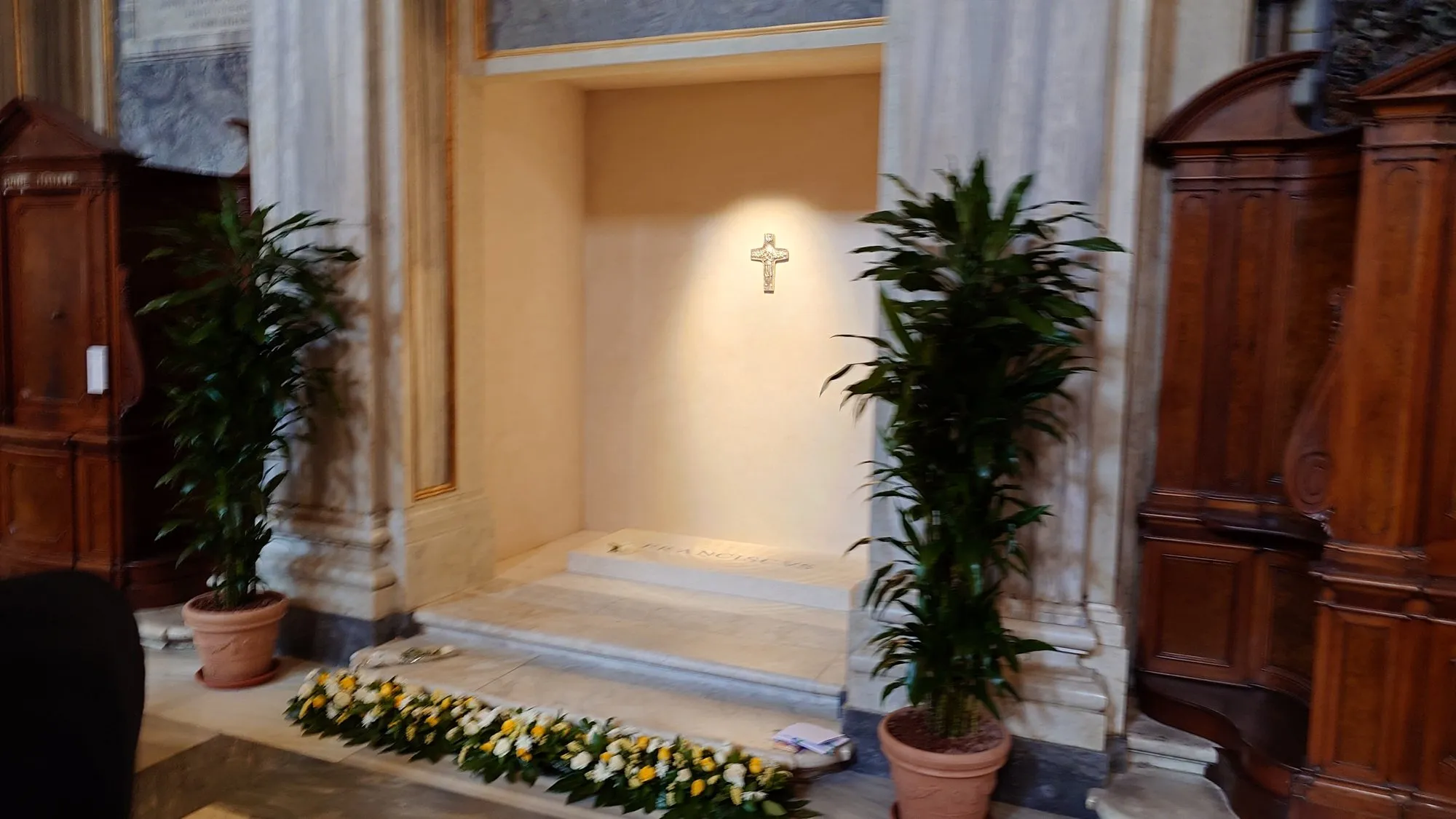
The tomb is simple: a plain stone with his name, in a quiet corner of one of Rome’s great basilicas. It’s a place of prayer as well as a sight, so people move past slowly and quietly.
It’s just as he asked for. Pope Francis wanted to be buried in the ground, in a simple tomb, with only the inscription Franciscus. Above it hangs a copy of the plain pectoral cross he wore. He was the first pope in more than a century to be buried outside the Vatican, and he chose Santa Maria Maggiore because he prayed there before and after his trips abroad.
Tips:
- Dress for a church: shoulders and knees covered. It’s a working basilica, and you may be turned away otherwise.
- Go early. The basilica opens early in the morning, which is usually the quietest time.
- Be respectful with photos. Check the signs and follow the staff; people are there to pray.
- Keep your bag small. There may be security checks at the door, and you’ll be standing in a queue. If you’re arriving or leaving by train, here’s where to leave your bags.
What else to see inside the basilica
While you’re there, the basilica itself is worth an hour. It’s one of Rome’s four major papal basilicas, and entry to the church is free. When I looked into it, these were the highlights:
- The Salus Populi Romani: an ancient icon of Mary in the Pauline Chapel, which Pope Francis visited before and after every trip abroad. His tomb is close by.
- The mosaics: some of the oldest in Rome, from the 5th century, along the nave and over the arch.
- The Holy Crib relic: in the crypt under the main altar, said to be wood from the manger in Bethlehem.
- The Sistine Chapel (not the Vatican one), built for Pope Sixtus V.
- The bell tower: at 75 metres, the tallest in Rome.
The museum, the Loggia of the Blessings (with more mosaics up close) and the archaeological area are paid extras, usually by guided visit. When I checked, tickets with priority entry and the museum started from about €8.50, so check the options on the day or book ahead.
Getting there
Santa Maria Maggiore is a short walk from Roma Termini, Rome’s main train station, so it’s easy to fit in on arrival or before a train. Metro lines A and B stop at Termini, and plenty of buses pass the basilica.
From the airport: the Leonardo Express train runs from Fiumicino Airport to Termini in about 30 minutes, for around €14. Cheaper airport buses also run to Termini from both Fiumicino and Ciampino, but take longer in traffic. Here’s the cheapest ways from the airport in general.
With bags: there are luggage storage points around Termini, which makes it easy to visit with a few hours before a train.
Coming from Tuscany or further away? The train is often as easy as driving and much less stressful in Rome’s traffic; here’s why I started choosing trains over planes in Italy.
What else to see nearby
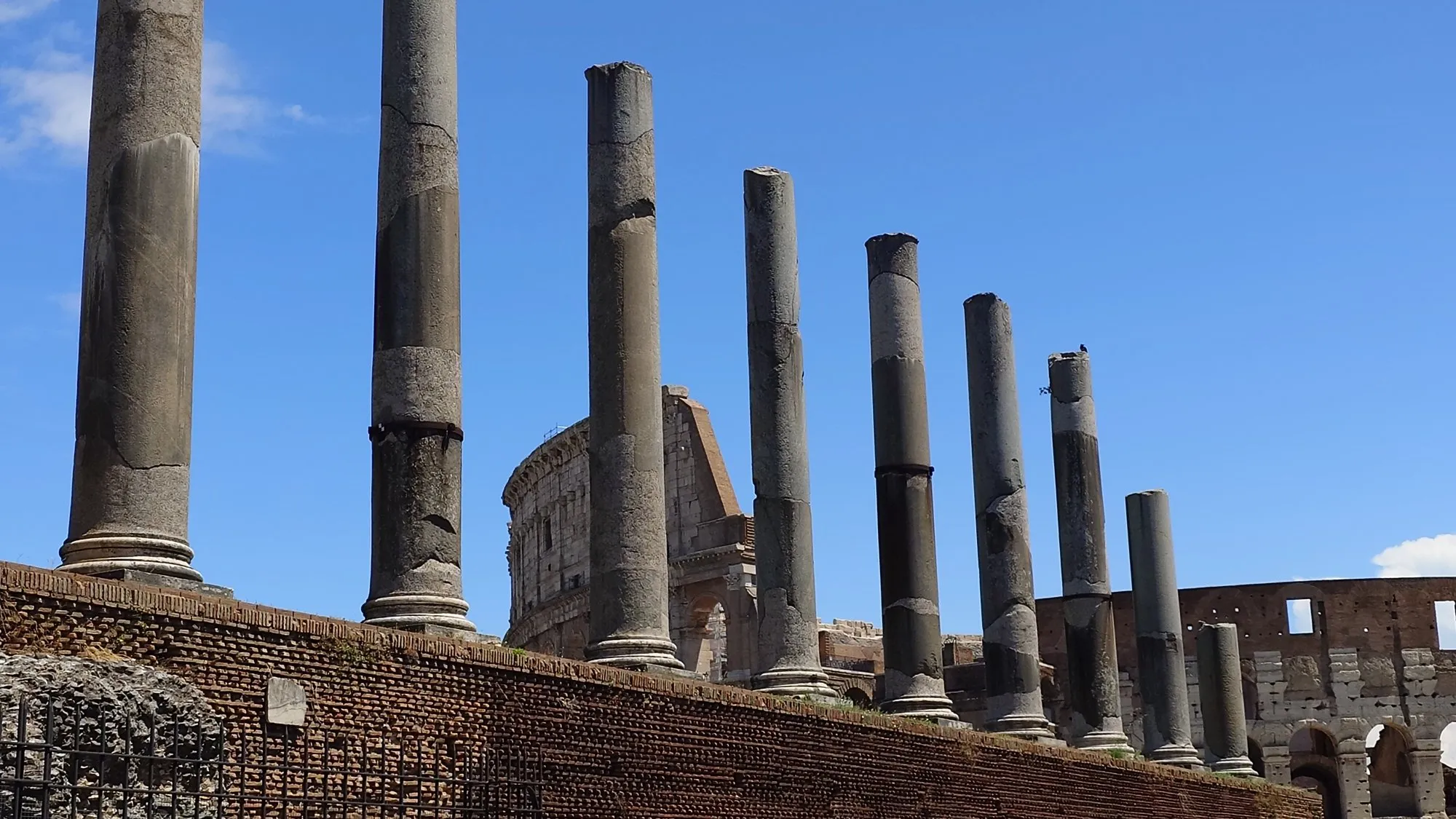
I’d been to Rome before, so after the tomb I went round the main sights again: the Colosseum, the Roman Forum and the Vittoriano.
- Plan the paid sights ahead. The Colosseum and Forum need tickets, and slots sell out in busy months. Sites like Tiqets sell timed tickets.
- Doing a lot in one or two days? Work out whether a city pass is worth it before you buy one.
- Eat your way round a neighbourhood. I didn’t do one on this trip, but when I looked into it, Eating Europe runs small-group food tours in Rome, including in Trastevere and Testaccio. It’s a splurge on a shoestring budget, so save it for one treat meal.
- Walk between sights. Central Rome is very walkable, and the walk itself is half the fun.
FAQ
Where is Pope Francis buried? In the Basilica of Santa Maria Maggiore in Rome, in the left nave between the Pauline Chapel and the Sforza Chapel.
Is it free to visit Pope Francis’s tomb? Yes. Entry to the basilica and the tomb is free.
What are the opening hours? When I checked, the basilica was open daily from about 7am to 7pm. Times can change for services and events.
Is it free to go inside Santa Maria Maggiore? Yes, the basilica is free. The museum, the loggia and the archaeological area are paid extras.
Why is Pope Francis buried at Santa Maria Maggiore? He had a strong devotion to the basilica and its icon of Mary, the Salus Populi Romani, and prayed there before and after his trips abroad. He asked to be buried there in a simple tomb.
How long is the queue? It was long when I went, a few weeks after the funeral. Going early in the morning is usually quieter.
What should I wear? Cover your shoulders and knees, as you would for any church in Rome.